Business entity clarity
Name, address, phone, categories, hours, and website links should match across GBP, the website, directories, and appointment tools.
Local visibility diagnostic
Local SEO for a med spa is not one trick in Google Maps. It is the fit between how patients search, how Google understands the business, and whether the website gives enough proof to make a consultation feel worth the next step.
Use this section to decide whether the topic fits the problem in front of the clinic. The most useful page is the one that helps a team say no to the wrong work.
These checks are intentionally operational. They point to things a real team can inspect, assign, and improve without pretending that rankings alone explain performance.
Name, address, phone, categories, hours, and website links should match across GBP, the website, directories, and appointment tools.
Core services in GBP should point toward real service pages, not generic menu blocks or thin pages with swapped city names.
Photos, provider bios, neighborhood references, review language, and consultation details should make the clinic feel physically real.
Every local landing path should make calling, booking, or asking a question obvious on mobile without hiding important expectations.
These pieces are ordered for diagnosis first, expansion second. Do not build more pages until the basic entity and service signals are clean.
 Checklist
 A field checklist for GBP, service pages, reviews, and consultation paths.
 Page strategy
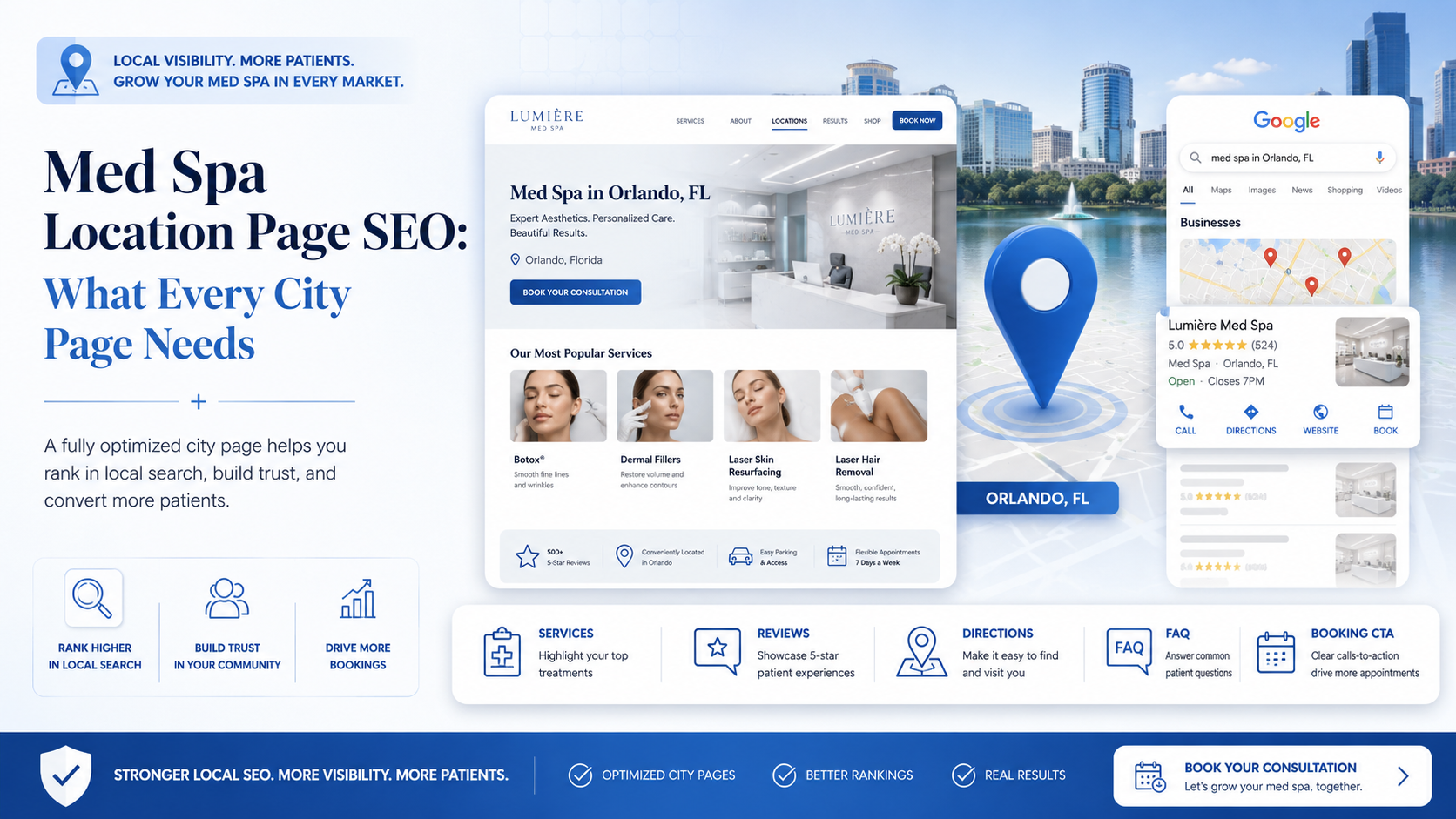
 How to decide when a city or location page deserves to exist.
 Multi-location
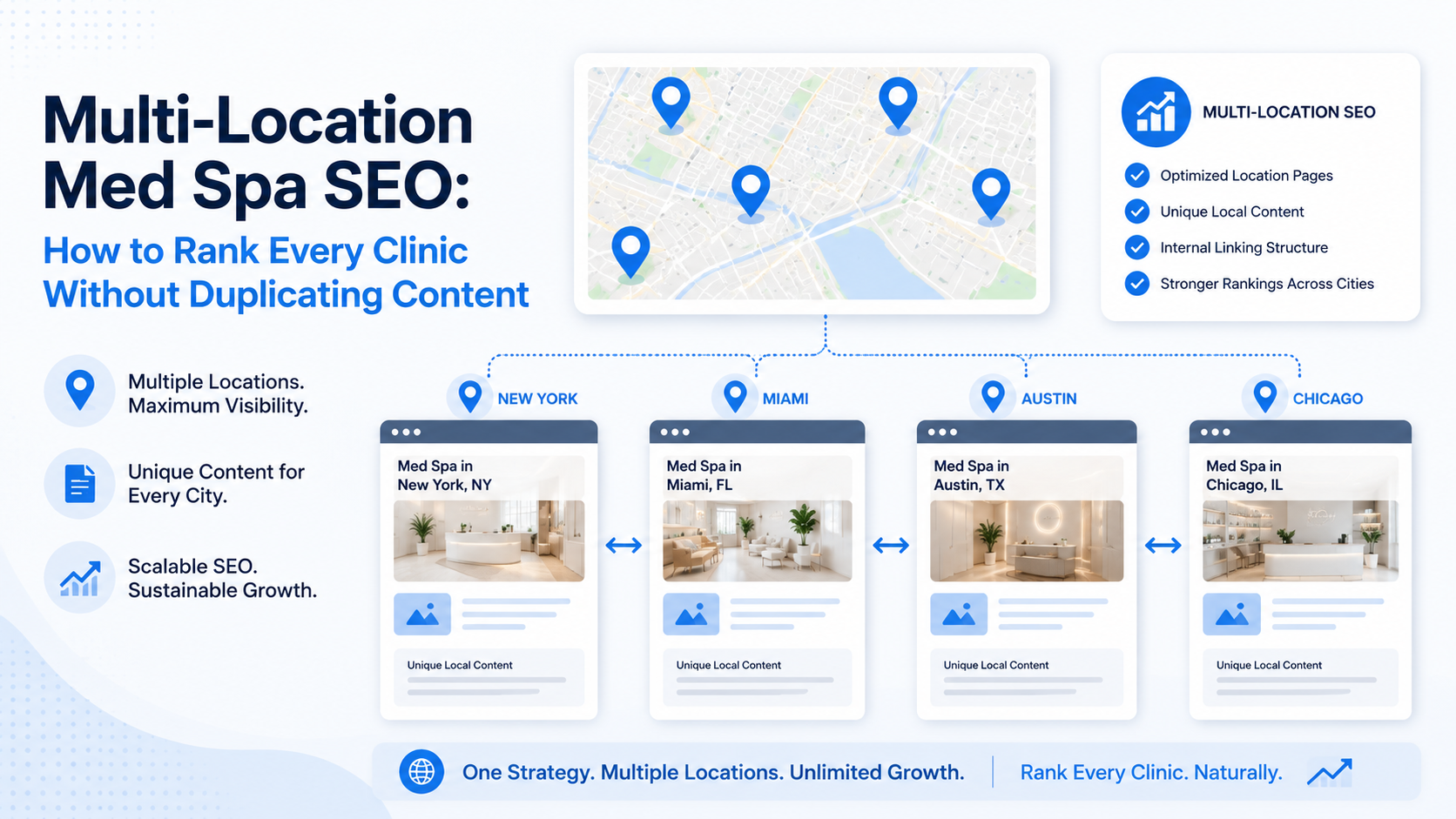
 A structure for scaling visibility without cloning weak local pages.
Only if the page can say something materially different: provider coverage, parking, travel time, consultation patterns, service mix, or local proof. Otherwise it reads like a search-engine page, not a patient page.
It is one part of the same system. Maps visibility, onsite service pages, reviews, and conversion paths all shape whether a local search becomes a real inquiry.