Observation
What is visible on the page, profile, or path without guessing intent?
Editorial teardown format
Breakdowns are useful when they separate observation from interpretation. The goal is not to invent dramatic case studies, but to show how an editor or strategist would reason through a messy marketing problem.
Use this section to decide whether the topic fits the problem in front of the clinic. The most useful page is the one that helps a team say no to the wrong work.
These checks are intentionally operational. They point to things a real team can inspect, assign, and improve without pretending that rankings alone explain performance.
What is visible on the page, profile, or path without guessing intent?
Where might a patient hesitate, lose trust, or choose a competitor?
What data, screenshots, call notes, or review themes would confirm the hypothesis?
What change can be tested without rebuilding the entire site?
Read these as reasoning examples, then adapt the inspection process to a real clinic.
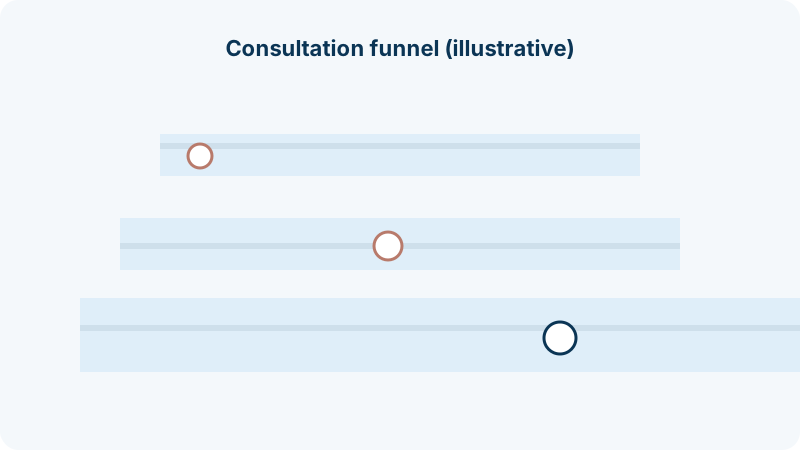 Conversion
 How to inspect a site path when visits do not become serious inquiries.
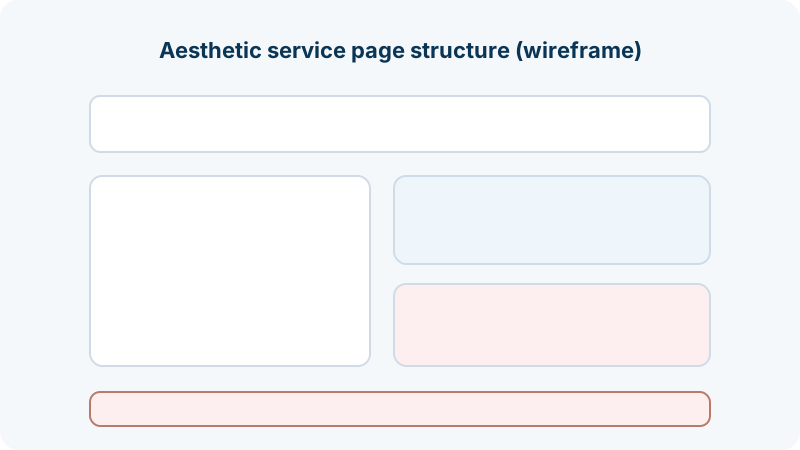 Service page
 A section-level look at proof, expectations, and CTA placement.
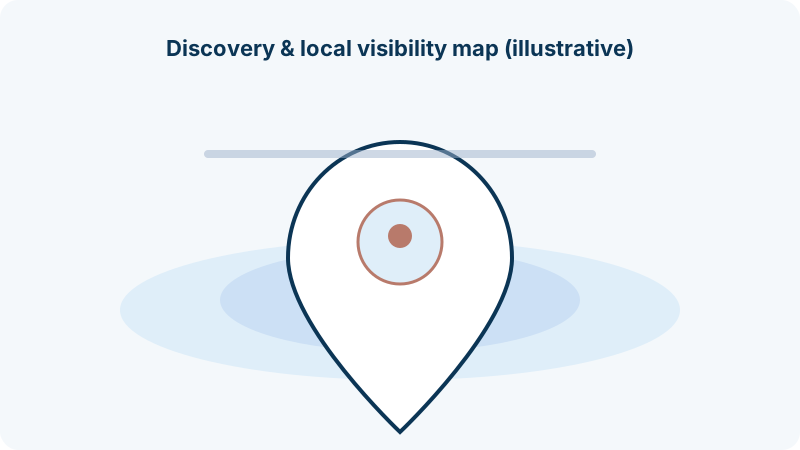 Maps
Maps A diagnosis path before assuming a penalty or algorithm problem.
No. They are editorial scenarios designed to teach diagnosis without implying confidential performance data.
Without a transparent data source and sampling method, benchmark numbers can mislead clinic owners. These breakdowns focus on inspection and decision quality instead.